)
)
)
MASC Apprentice Award to be presented at the show
Introducing the MASC Award for the “Most Improved” Heritage Skills Apprentice.
MASC takes action to support the next generation of classic car businesses, and users.
In 2024 an article was printed in Mascot, the monthly magazine of the Midget and Sprite Club, entitled “What have the FBHVC ever done for us?” It explained how that organisation works to support the whole historic vehicle industry and clubs in the UK, and informed members of MASC’s desire to make more use of their services, and ensure we support them where possible. One of the topics in that article was the apprenticeship scheme which is run by the Heritage Skills Association, with support from the FBHVC via a charitable arm known as the Federation Skills Trust (FST). After reading the article, MASC member David Wright got in touch to suggest we take positive action, and provide some kind of specific support to the apprentice scheme ourselves.
It’s an idea which makes sense: go to any classics-related event and it is highly likely that one topic of conversation you will overhear will question how we can pass on our enthusiasm, knowledge, and indeed our cars to future users. It doesn’t just affect clubs like ours – it crops up for vintage and veteran cars (i.e. pre-world war two), and indeed for other types of vehicle such as motorbikes, buses, and trucks to name a few. MASC has always aimed to encourage ownership of our cars to the widest possible audience; the existence of the Young Members group and the stand they have at the NEC shows is the most obvious evidence of that.
The idea was put forward to the committee and immediately gained support. Discussions took place to consider what form the support could take. The club then announced that, starting at the Classic Motor Show 2024, an annual award will be presented for the “Most Improved Apprentice” on the HSA’s Apprenticeship scheme. For the winner the award woudtake the form of a trophy, and £300 award; 1 year’s membership of MASC will also be included.
More about the apprenticeship scheme
The HSA was founded in 2015 by John PItchforth, and now runs two apprenticeship courses; one is based at Bicester Heritage, focussed on mechanical skills, the other is based at Brooklands Museum and focuses on coachbuilding skills. It started with the first intake of 8 students in 2018, and has now grown to a total of approximately 180 past and current participants. Their stated mission is “to ensure that the world’s automotive engineering heritage is maintained and the skills to maintain it are preserved for future generations of engineers and enthusiasts”.
All modern apprentice schemes are run to set standards which are agreed with the government: this is done to ensure consistency and quality of the content and delivery. The official title for the standard is “Heritage Engineering Technician”; it is a “Level 3” scheme meaning in education terms, it follows on from Level 2 qualifications such as GCSE’s, and sits alongside other Level 3 options such as A, AS, or T Levels, and the BTEC diplomas provided by many further education establishments.
Anyone can apply to join the HSA scheme: there are no age restrictions, and current candidates are aged from 16 up to 52. The apprentices come from a wide range of businesses across the UK, some are small business supporting all manner of classic vehicles, others may specialise in one particular marque and be more specialist in the services they provide. The apprentices attend the training centre on block release, each block being one week, with nine blocks per year across the three and a half year course. Between blocks, the apprentices return to their employer to complete on job training.
Detailed information about the HSA and the courses can be found here: https://www.heritageskillsacademy.co.uk/about
Why support the HSA?
The Midget and Sprite Club visited the HSA’s Bicester site to understand more details of how they operate. It doesn’t take long to realise they are teaching essential and useful skills needed to maintain cars such as ours into the future, and filling a gap not covered by other courses: pillar drills, lathes, metal benders and similar were in evidence ready for training; A MIG and TIG welding area is currently being set up following a reorganisation of the workshop. Candidates on site that day were busy learning hands-on skills with a gearbox and differential. There were a range of cars on site which are used for training purposes, ranging for a 1920’s Humber through to a 1970’s MGB; John Pitchforth explained they have a deliberate policy of getting candidates to work with, and learn on, a range of vehicles and technologies so they do not become over-familiar with one marque or model: the idea is to teach underlying principles and knowledge, rather than specialist methods for one vehicle type.
We’re all familiar with the idea of a “win-win”; supporting this scheme seems to be a “win-win-win”.
Apprentices win: they receive a quality training scheme giving them the skills to ensure they can succeed in their future careers.
Businesses win: they have a route to recruit and train new candidates, providing fresh skills and capability to help their businesses move forward and continue to succeed in the future.
MASC members, and classic vehicle users in general, win: we can have more confidence that businesses will exist in future to look after our cars, and that the classic vehicle industry in general will survive and hopefully thrive. And maybe somewhere amongst our membership, and readership, there are potential future apprentices who will look at the HSA website and think “That’s for me” – let’s hope so.
Why “Most Improved Apprentice”?
When considering what award to provide, MASC wanted to encourage anyone to succeed, regardless of their background knowledge and previous skills coming into the scheme. Some of the apprentices may have a head start when joining they scheme – they may have grown up working on the family collection of classics, or come from a family which owns the business they work in. Looking to reward the “Most Improved Apprentice” is designed to demonstrate to all the candidates that hard work and progress can be recognised, regardless of their starting point.
Last year’s winner and this year’s Award
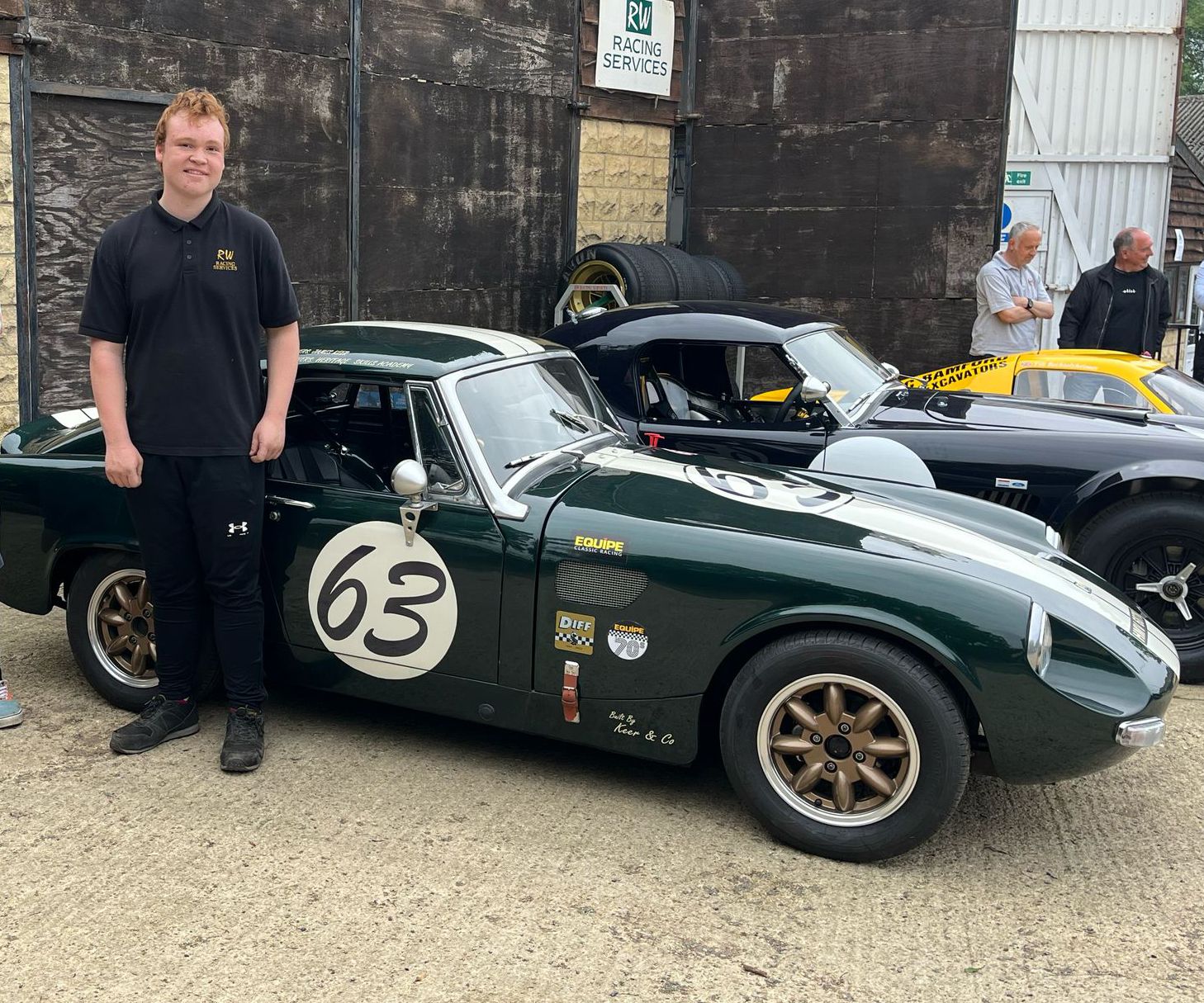
The first winner of the MASC award was James Keer of RW Racing Services (https://rw-racing.com/) in Northamptonshire. James is an apprentice on the HSA’s Heritage Engineering Technician Level 3 course, based at Bicester, and had just started the second year of his training. He was chosen for the award by the HSA because of the significant development and progression in his confidence, practical skills, and enthusiasm for the cars he works on in his “day job”. James’ enthusiasm for classic vehicles in general, and motorsport in particular, quickly became apparent – an example of this is that, along with other family members, he volunteers as a marshal for race meetings at Silverstone.
In addition, we were surprised (and yes, pleased too!) to find out that James was busy with the build of his own historic race car – by perfect coincidence it is an Austin Healey Sprite, which he was planning to race in the CSCC “Swinging Sixties” race series next year, and also possibly the Lackford Engineering Midget and Sprite Challenge. James, and his car will be present on the Young Members section of the Midget and Sprite Club stand at this year’s Classic Motor Show.
The 2025 winner will be presented with their award at the show on the Friday, hosted once again by the FBHVC.
)
)

)
)
)